Sports equipment and shoes
Every sport has its own technical equipment, with features designed to maximize physical activity and the ultimate goal of optimizing and improving performance. Shoes, therefore, become a fundamental element, and so the choice is equally important.
But can we also prevent injuries through good shoe selection?
 We're now bombarded with advertisements and salespeople recommending fantastic shoes designed to fit our body's posture. We've often heard that good posture reduces the risk of injury and that a good shoe could be the solution. Unfortunately, or fortunately, such a statement isn't possible today. Spending on shoes cannot be associated with prevention but rather with personal taste. and the sensations we experience and the influence of marketing we are subjected to. However, choosing a trekking or running shoe should be as subjective as possible!
Evaluation of the type of support
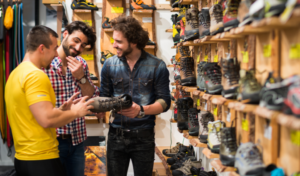 The clerk, if they're experienced or have a well-stocked store, might ask you to step onto a baropodometric platform, simply to see how you distribute your body weight. Another very useful tool is to ask you to use a treadmill in the store to see how you use your foot and how the load is distributed across your feet and joints.
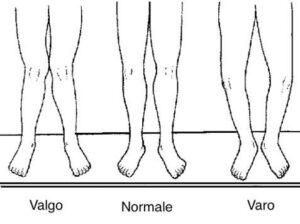 Knowing the characteristics of our support: varus, valgus, arched or not arched plantar arch, It could be helpful in choosing the most suitable footwear for our sporting activity. However, consider that a salesperson doesn't study the human body and its pathologies; they simply offer their experience and draw conclusions based solely on an empirical perspective. Therefore, it's perfect if we want to get recommendations. a shoe that allows us to perform our hobbies or sports to the best of our ability, but we cannot receive advice on preventing injuries such as sprains.
The posture
To date there is no scientific research that demonstrates that a particular shoe can prevent injury.. 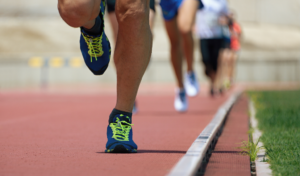 Many scientific experts also question whether it's worth continually modifying posture when an athlete has actually achieved structural balance. Let's take the example of marathon runner Emil Zatopek, known as the "Human Locomotive": he's won numerous trophies, but he's also famous for his uncoordinated running and a very pronounced arch valgus. Does it make sense to modify the posture of someone who has no PAIN and achieves brilliant results, like this one? The answer is not very.
How can we choose the right footwear?
 The equipment we buy is intended to help us perform our athletic movements better, not to preserve our bodies.The choice is always subjective, so we must consider our characteristics: foot structure and shape, wide or narrow base, taking into account our body weight and our physical preparation.
In conclusion The most appropriate footwear will be based on several factors, such as habits, goals, recent and past history, previous injuries and therefore we avoid the idea of having a shoe that can fit everyone even if it is the most famous or the best on the market.
The only prevention we can do is manage the load or mechanical stress applied to the body and its ability to absorb it, but this is a different story. The stimulation of a tissue and its tolerance or adaptation to a specific stimulus, if unbalanced, could put us at risk of injury. So choose a shoe that best suits your hobby or sport. and don't think too much about preventing hypothetical injuries. Train well and arrive prepared for sports activity.


Via Donatello 75
00195 Rome
Tel. (+39) 06 39375719


Mon. – Fri. 8:00 – 20:00
Saturday 8:00 – 14:00

Via Donatello 75
00195 Rome
Tel. (+39) 06 39375719
Mon. – Fri. 8:00 – 20:00
Saturday 8:00 – 14:00

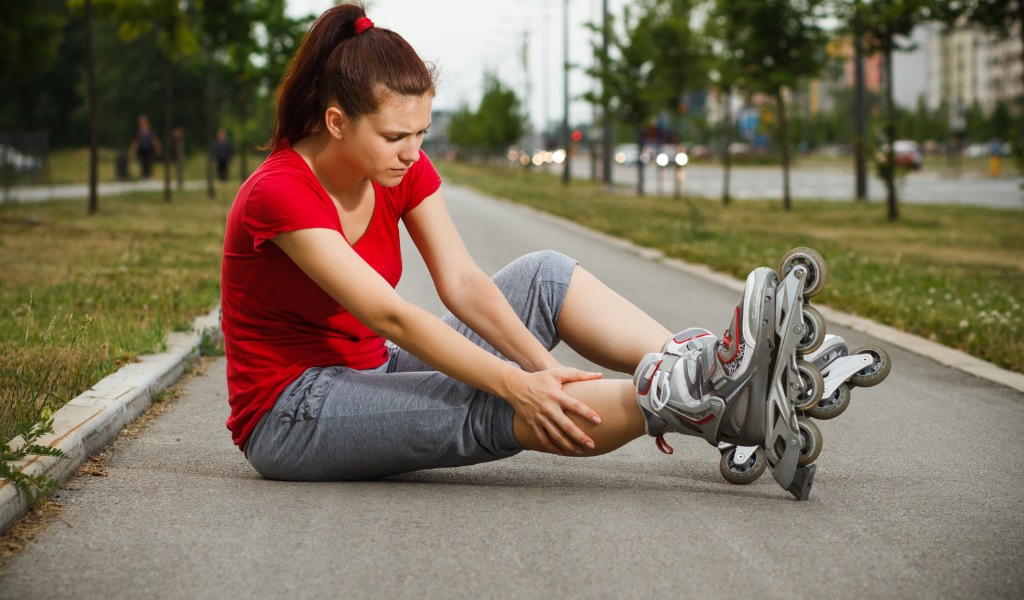
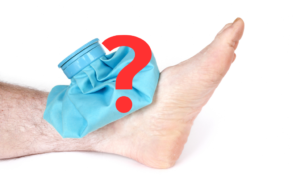 pain and swelling? The use of ice creates many doubtsFor example, it has been shown that internal temperature does not change, so endogenous cold does not pass through. Prolonged use can lead to a loss of responsiveness at the receptor level, resulting in a structure less responsive to external stimuli.
 leaking after the injury. Swelling is one of the post-traumatic effects, and to promote venous return, we must implement easily reproducible practices.
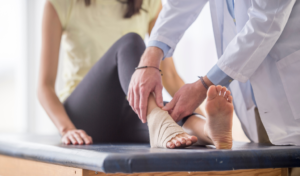 Make sure they are applied properly and sensibly. A poorly applied bandage can be worse than no bandage at all, so carefully examine the injury and assess the patient's needs.
 All these are important guidelines that we can recommend to the patient who has injured himself, but another highly recommended approach is to to be seen by a
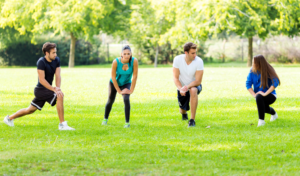 -Importance of a good warm-up: warming up serves to raise body temperature, thus improving the FLUIDITY of the blood and promoting the OXYGENATION of the muscles in order to avoid contractures, strains or tears.