Hernia
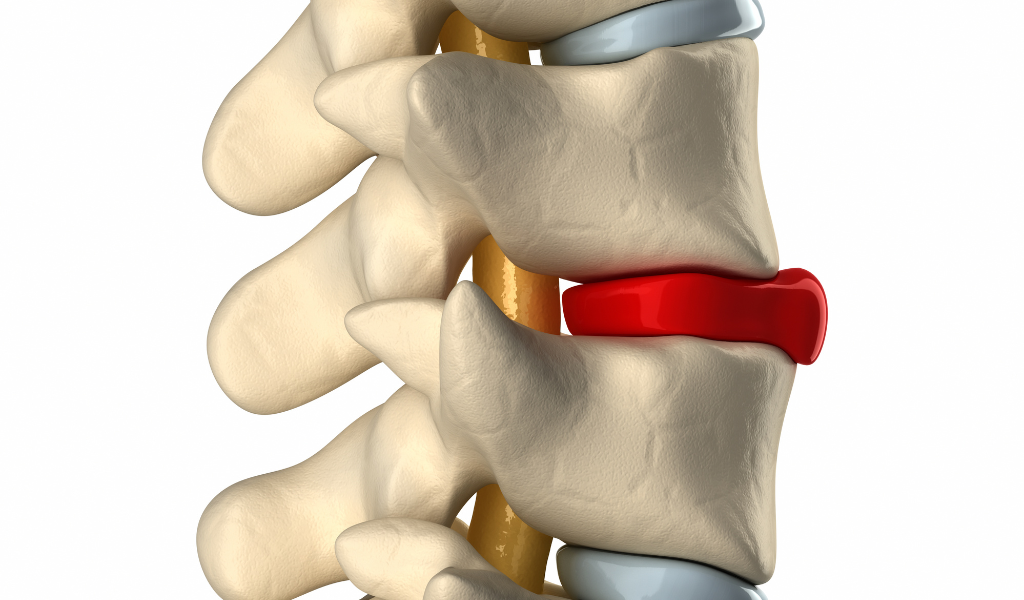
The word HERNIA is automatically associated with back pain or a groin problem. The etymology of the word, however, helps us understand more clearly what happens inside our bodies. Herniation is the protrusion of a mass from its natural position, or rather, when the nucleus pulposus herniates, is not held in place by the annulus fibrosus that keeps it in place.
Herniated disc
Anyone could have a herniated disc and experience no pain or symptoms. It's a degeneration of the musculoskeletal system that can no longer contain the fluid within the disc cavity, or neutral zone. It's important for the disc to be kept hydrated so it can withstand external stimuli well.
Some research has shown that runners have healthier discs than sedentary individuals. Theoretically, the disc moves backward during flexion, toward the structures of the spinal canal and the foramina, leading to disc prolapse. However, it moves forward when we extend the spine.
This theoretical line is denied when during the extension of the spine, the anterior wall of the disc  The intervertebral disc is stretched and therefore taut, while the posterior wall is shortened and therefore relaxed. This condition could lead to the disc's only escape route being a posterior direction, contrary to what was claimed in the previous model.
If the patient were to have a posterior hernia, during the extension movement the herniation would move even further backward, compressing the nerve structures behind it, therefore a careful evaluation of the patients is necessary because each patient could have different situations and conditions.
Spinal movements
Flexion movements of the spine cause the spinal cord to stretch, increasing neural tension. The roots  The nerves assume a more vertical direction, and the intervertebral foramen (TP3T) increases its area, creating more space for the structures within it. During extension, however, the spinal cord shortens and narrows the TP3T foramen. Although the nerve roots are relaxed during extension, the narrowing of the foramen, combined with a possible backward displacement of the intervertebral disc, could cause nerve compression. Clinical presentations are varied, and mixed components may occur, so the patient experiences pain during both flexion and extension.
Lumbosciatica
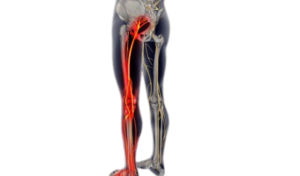 A very common example is the lumbosciatica, following the closure of the L5-S1 foramen (the smallest of the intervertebral foramina). If the herniation compresses the root, creating a radiculopathy, nerve conduction is blocked in the spinal nerve axon or its roots, causing hypoesthesia (numbness), muscle weakness, and/or reduced reflexes, but it is important to specify that this is not radicular pain. The association between hernia and pain is not correct, because we could only have silent symptoms., or have associated neuropathic pain, distributed across the dermatomes of the body, radiating below the knee and often to the foot. Therefore, the distribution of symptoms is very important; if they were to be anterior, it would be called lumbocruralgia, along the course of the crural nerve (L4 and proximal roots) instead the posterior distribution, the famous lumbosciatica, along the course of the sciatic nerve (L5-S1).
Radiculopathy
The radi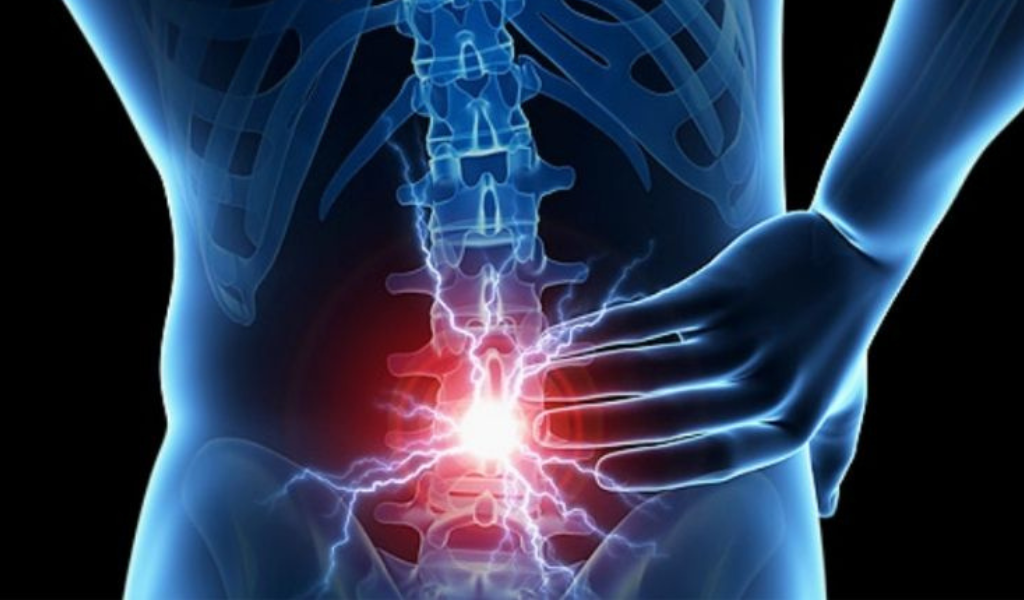 Colopathy is characterized by impaired sensation, strength, and reflexes, as well as the absence of pain. This condition is even more evident in chronic cases, where the symptoms are very severe but painless. This detail must always be taken into consideration, because the absence of pain does not indicate patient improvement. The patient's progress can only be considered evident in terms of regained sensation, strength, and reflexes. This assessment should be performed bilaterally to compare the affected side with the contralateral side.
Cause of pain
The patient experiences pain due to the compression phenomenon, which negatively affects the root's blood circulation. Even a small amount of compression can lead to intraneural edema, resulting in inflammation and sensitization of the nerve root to mechanical stimuli, whether distracting (tension) or compressive.
To summarize: A hernia that compresses a nerve will not necessarily cause pain, while a sensitized or edematous nerve root will certainly cause pain.


Via Donatello 75
00195 Rome
Tel. (+39) 06 39375719


Mon. – Fri. 8:00 – 20:00
Saturday 8:00 – 14:00

Via Donatello 75
00195 Rome
Tel. (+39) 06 39375719
Mon. – Fri. 8:00 – 20:00
Saturday 8:00 – 14:00