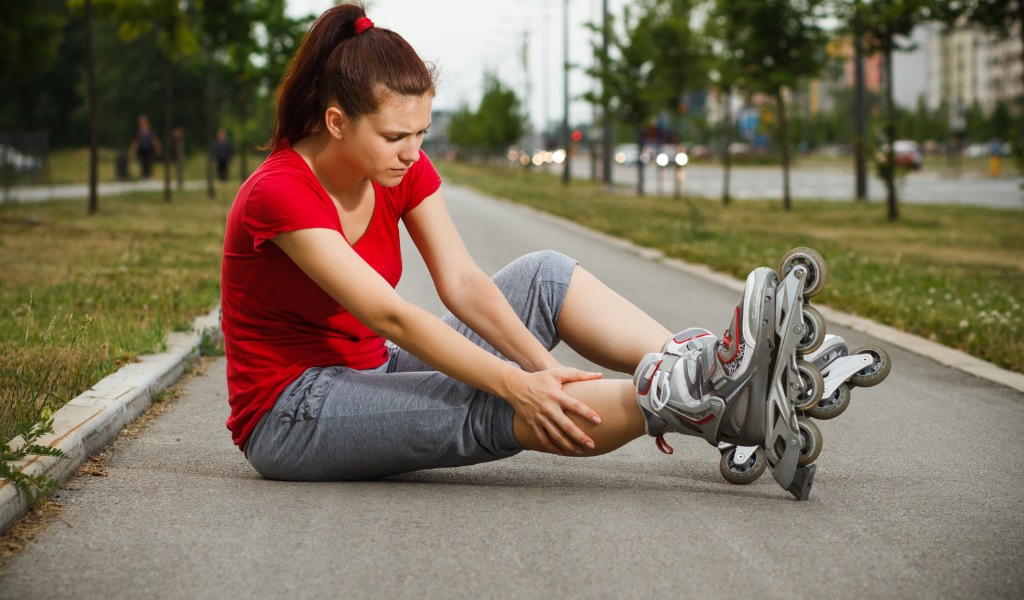
Summer activities often lead to injuries such as sprains, tendonitis, or muscle tears. It's always complicated and difficult to educate people who have become accustomed to certain rituals passed down from generation to generation. Today, I'd like to dedicate an entire article to what we often, or almost always, do wrong when faced with injuries affecting a region of the musculoskeletal system.
The latest scientific research makes us reflect on the advice we give to people, but how can we educate citizens and especially medical professionals to stay up-to-date? Patients are the ones who pay the price; in other words, the more we stay abreast of research, the better we can help our patients.
Injuries, what to AVOID?
Today the acronyms ICE, RICE, POLICE….are all outdated protocols.
Why did my mother always tell me to put ice on or does the doctor always shout in different languages the need to provide endogenous cold to reduce the pain? 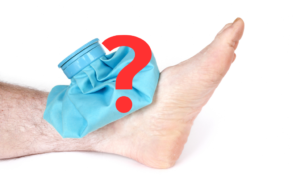 pain and swelling? The use of ice creates many doubtsFor example, it has been shown that internal temperature does not change, so endogenous cold does not pass through. Prolonged use can lead to a loss of responsiveness at the receptor level, resulting in a structure less responsive to external stimuli.
Prolonged use can also cause skin burns, but this can be easily avoided by applying a cloth to create a barrier over our skin, avoiding direct contact. In short, grandma's bath of water, salt, and vinegar is not accepted by the scientific community; it hasn't passed the approval test.
But the question might arise spontaneously: doesn't ice reduce pain sensitivity? The answer is yes. Ice has a local and temporary analgesic effect, so analgesia is the first thing a person seeks, but we no longer have to reason empirically. It would be truly important if everyone followed common guidelines because there would be fewer internal disputes and more communication between professionals and doctors, eliminating the personal ego that undermines medicine.
Injuries, what to DO?
As of today, if I were to suffer an injury this summer, what should I do?
Follow modern guidelines by remembering a simple acronym we also find in other contexts: PEACE & LOVE. This is the new model to follow, but now let's take a step-by-step look at what each letter of this acronym means.
Protection: prevent the affected limb or area from suffering further damage or movements that exacerbate the pain. In short, the patient must remain still and protectedBecause the real medicine is rest and calm. The body will activate all the healing mechanisms it knows, much better than a super-equipped pharmacy.
Elevation: in case of trauma to the lower limbs, raise your leg above the level of your heart so that gravity can bring the liquids back to the base more easily  leaking after the injury. Swelling is one of the post-traumatic effects, and to promote venous return, we must implement easily reproducible practices.
Avoid Anti-inflammatory drugs: avoid anti-inflammatory drugs And don't use ice, it could create confusion and fear. In fact, it's best to avoid taking medications in the early stages and wait for the body to perform its natural healing functions. Medication could (I use the conditional, because I could be lynched for this statement) make things worse, slowing down the body's healing process, which instead needs to run its course.
Our body recognizes that we've suffered damage and is equipped with a highly specialized internal pharmacy. It uses inflammation to repair damaged tissue, so interrupting this process would have the opposite effect. Now think about how many times we've done the opposite: almost always, myself included.
Compression: must reduce swelling and therefore the use of elastic bandages or tape it is recommended, the important thing is 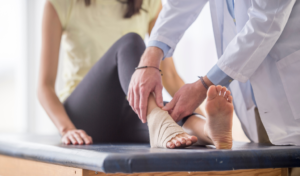 Make sure they are applied properly and sensibly. A poorly applied bandage can be worse than no bandage at all, so carefully examine the injury and assess the patient's needs.
Education: Educating the patient is very important. It's helpful to explain their condition, choosing the right words. Empathy and verbal and nonverbal communication are essential. The patient will then choose their own path, but at least we know we've done our best to educate them.
Load: increase the load gradually Following the signals sent by the patient, who is very good at recognizing whether a movement is safe or not, is essential. Therefore, involve the patient in this process, because we must return to weight-bearing, but only when the patient is ready and when the practitioner deems it appropriate. Pain will be the signal that guides us through this phase and will indicate whether it is too early or not.
Optimism: the psychological aspect has been introduced for some time now because it has a huge influence on the progress of healing, our patients need to be supported emotionally too, so be optimistic!
The body adapts to everything, even when faced with a bad injury.
To convey serenity, to make people understand the various changes in state and the improvements achieved, to remove as much as possible the fear of chronic and persistent pain.
Vascularization: allow, when possible, cardiovascular activities that help the vascularization of damaged tissue.
Exercise: Finally, active recovery is the most popular option, especially when the pain has diminished or disappeared completely. Advise the patient muscle strengthening exercises, proprioceptive ones that stimulate the affected area to better respond to external stimuli and to avoid further relapses.
Rely on the right specialists
 All these are important guidelines that we can recommend to the patient who has injured himself, but another highly recommended approach is to to be seen by a physiotherapist specialist who knows the procedures to be carried out very well. In short, you should never underestimate a physical problem, because it could become something much more annoying and difficult to overcome. Education and common sense help us avoid much more serious consequences.

Via Donatello 75
00195 Rome
Tel. (+39) 06 39375719


Mon. – Fri. 8:00 – 20:00
Saturday 8:00 – 14:00

Via Donatello 75
00195 Rome
Tel. (+39) 06 39375719
Mon. – Fri. 8:00 – 20:00
Saturday 8:00 – 14:00