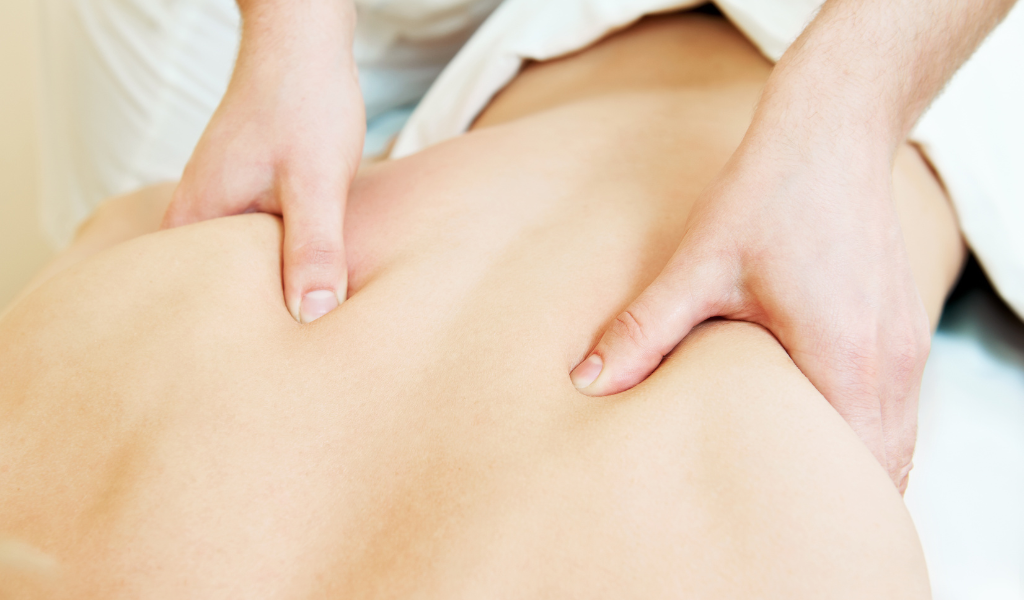
What is massage therapy?
There massage therapy it's a manual technique basic therapy used by a physiotherapist to alleviate or reduce the symptoms of some pathologies of the musculoskeletal system.
When it is used
 There massage therapy It is applied to patients who have muscle contractures, muscle injuries, tension on the band And myofascial painMassage is performed on muscle or tendon structures and is one of the many healing therapies used in the rehabilitation field.. People often get confused by comparing a physiotherapist to a massage therapist, when in fact there is a big difference. A physiotherapist is a graduate in the medical field, specialized in rehabilitation, so massage therapy is one of the first techniques that this professional must know.
Pathology evaluation
Massage therapy, performed with proper care, can relieve pain or reduce myofascial tension, but it cannot cure conditions that originate outside of the muscle. Indeed, to treat common conditions such as lumbago, neck pain, tendinitis, or inflammation, a thorough assessment of the patient is essential to determine whether massage therapy is the most appropriate technique. Therefore, to help our patients with massage techniques, it is essential to understand whether the pain is directly related to a muscle problem. If the condition or dysfunction originates elsewhere, the patient would likely need to combine massage with another therapy. Indeed, many conditions require a multifactorial approach, where the patient and their pain must be at the center of our rehabilitation process.
Reducing pain and stress with massage
Massage therapy in fact plays a fundamental role even for those structures that are not on the surface and therefore in contact with the therapist's hands, for example all those situations psychosomatic that affect the patient. Pain is a concept that must be carefully studied, and massage therapy can be truly effective for many reasons. Massage is often perceived by patients as pleasant, even if "painful," because it's seen as a moment of escape, where the patient is the center of attention.
Many people feel the need to reduce stress, and massage aims to promote physical health and well-being, including our psychophysical well-being. One of its most interesting effects is the stimulation of the secretion of endorphins, chemicals produced by our brain that have powerful analgesic and muscle-relaxing properties. The pain signal felt by the patient is modulated by the mechanical stimulation of the body's receptors, reducing the sensation of pain, tension, or discomfort.
Improved blood circulation
 Let's not forget all the other functions massage therapy can have and what it can encompass. For example, the lymphatic system is a body system that benefits from this treatment.
Through massage, we improve blood circulation, increase the supply of oxygen to the cells and therefore nutrients to the affected tissues. Massage promotes the lymphatic drainage and the elimination of all catabolites or waste substances.
Cellulite And the retentionnor water These are conditions that often require massage therapy, where the only major difference lies in the method of delivery. That is, where there is a lymphatic or circulatory problem, the stimulation must be much gentler and more superficial, compared to a muscular problem, such as a contracture, where stimulation can be even deeper.
For athletes
One of the key variables is the speed of application. It's a simple equation: the faster the technique, the more activating the system involved will be; the slower it is, the less stimulation will be achieved. Indeed, it's crucial to evaluate the patient before starting treatment and determine if there are any significant contraindications.
 The athletes for example they often need a cycle of massage therapy, in fact in agreement with the therapist, some treatments are performed activating massages, so fast, before a competition or myo-relaxants (slow), following a race or sporting activity, to reduce muscle tension or discomfort.
In short, everything requires an excellent knowledge of the subject, including anatomy, physiology, pathophysiology, the practitioner's empirical experience, empathy, manual dexterity, and all those skills necessary to best help the patient. Within the practitioner's remit, patient assessment remains the first priority. A good assessment is more important than a well-executed technique, because If the therapist understands the origin of the problem, treating the patient becomes easier.


Via Donatello 75
00195 Rome
Tel. (+39) 06 39375719


Mon. – Fri. 8:00 – 20:00
Saturday 8:00 – 14:00

Via Donatello 75
00195 Rome
Tel. (+39) 06 39375719
Mon. – Fri. 8:00 – 20:00
Saturday 8:00 – 14:00