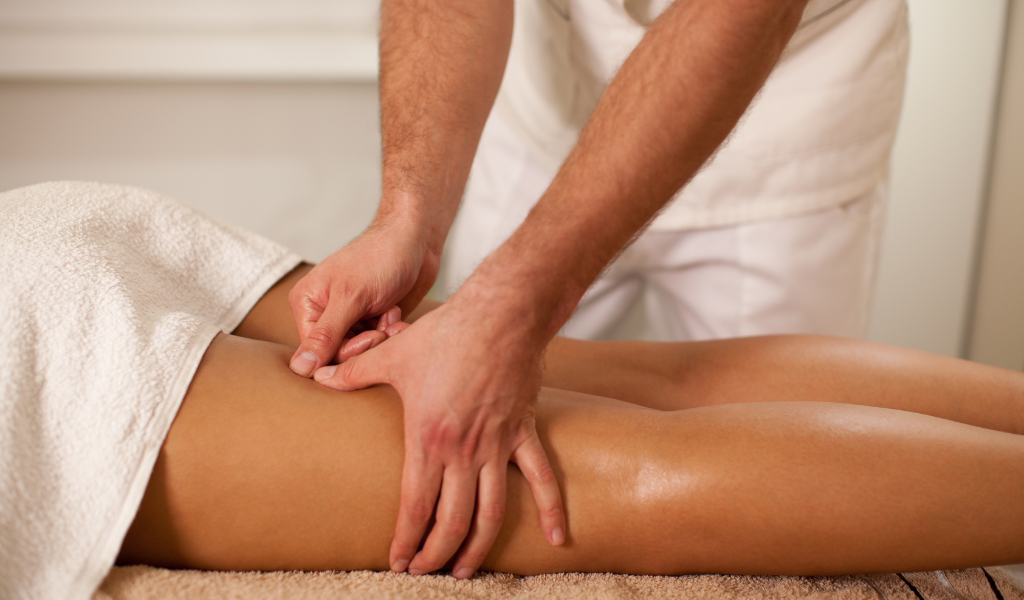
Draining massage
 Lymphatic drainage massage It is a technique used in the medical field that allows for direct work on the lymphatic system through the application of the therapist's manual techniques. The lymphatic system was discovered and studied late in anatomy, and thus also its treatment. The most well-known schools of lymphatic drainage are the Leduc school and the Vodder method. Both are based on similar principles, but differ in the number of maneuvers and execution protocols. The Vodder method remains the most practiced and studied in the medical-scientific field, including rheumatology. It consists of massages typically performed on the neck, nape, abdomen, and chest.
It's important to provide a brief introduction to the lymphatic system to understand how manual therapy can affect the affected structures. All organs and tissues in the body are supplied by lymphatic vessels, except the cornea, skin, bones, and lung alveoli.
Lymphatic vascular system
The vascular system lymphatic It is composed of: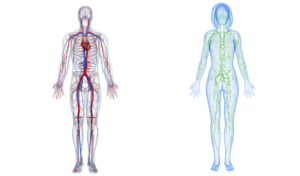
- LYMPHATIC CIRCULATORY SYSTEM: capillaries, lymphatic vessels, ducts
- LYMPH NODES
- LYMPHOID ORGANS: thymus, spleen, mucosa-associated lymphoid tissue, within which the LYMPH flows that originates in the interstitial tissue of the cells.
Although venous circulation is slow and has a lower flow rate than arterial circulation, lymphatic circulation is even slower. The venous network serves as a reservoir, and in this space, waste products are absorbed by the lymphatic circulation. Blood-tissue exchange occurs in the capillary-interstitial space, facilitated by the marked slowing of circulation that characterizes it.
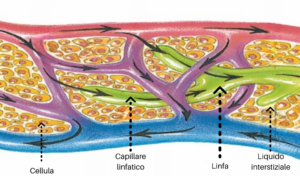 The interstitium, made up of collagen, elastin, and cross-linked fibers, is the space through which molecular exchanges between tissues occur through the phenomenon of diffusion. This exchange occurs thanks to the phenomenon of physiological lymphatic drainage and therefore the extracellular matrix. When there is congestion, edema can form. Unlike the capillary system, which is almost impermeable, the prelymphatic vessels allow the passage of larger substances, such as proteins, tissue catabolites, viruses, and bacteria. In the interstitium, in fact, the 90% of substances is reabsorbed by the blood capillary system, while the 10% by the lymphatic system. Entering the lymphatic tracts, this fluid is called lymph.
The lymph
The lymph is composed from water, proteins, lipids, cells and exogenous substances. It has the function to nourish cells, ensure immune response, and transport bacteria and macrophages to the lymph nodes. After passing through the thoracic duct (lymph nodes), the purified lymph returns to the bloodstream to form plasma.
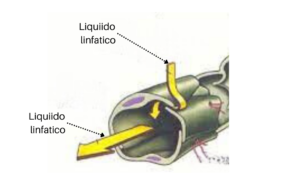 There are various mechanisms of lymph transport, intrinsic (spontaneous contractions of the lymphatics and the sympathetic nervous system) or extrinsic, such as the activity of the muscle or joint pump. When this transport capacity is impaired, or when proteins remain in the interstitium for too long, the connective tissue changes; fluid stasis and stagnation occur, preventing proteins from passing through, causing edema.
THE LYMPHATIC VASCULAR SYSTEM ENSURES THE TRANSPORT FUNCTION OF INTERSTITIAL PROTEINS AND CONSEQUENTLY GUARANTEES THE BODY'S IMMUNE DEFENSE FUNCTION.
The lymphatic system is innervated by the autonomic system which controls its ability to adapt to internal and external changes. It is therefore closely linked to emotions!!!!!
Lymphatic massage
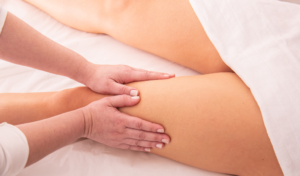
Lymphatic massage Being a relaxing treatment, it releases endorphins in the body, resulting in a general sense of well-being. The lymphatic drainage manual is a manual technique, which uses superficial, rhythmic maneuvers in a proximal-distal sequence. Drainage massage acts on the interstitial matrix of tissues, the lymphatic vessels, and the lymph nodes, promoting the penetration of macromolecules stagnant in the interstitium into the lymphatic vessels. It gently squeezes the lymph nodes.
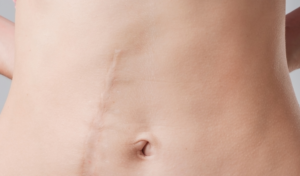 DLM has an ANTI-EDEMIA AND REGENERATING EFFECT on tissues, especially in cases of scarsIt is also recognized as having an analgesic effect because it acts on mechanoreceptors. The mechano-pressure stimulus inhibits nociceptive input from local nociceptors and, by washing the interstitium and the consequent removal of harmful substances (kinins), reduces the painful effect.
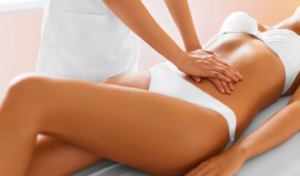 DLM also has an effect on muscle tone, reducing tone and improving tissue trophism, as well as acting on the IMMUNE SYSTEM.
A session lasts from 20 to 60 minutes, using slow and delicate maneuvers that respect the physiological rhythm, emptying the lymph nodes without causing pain.
DLM should be pleasant; in fact, the patient often relaxes, acting on the sympathetic and parasympathetic nervous systems. The pressure of the hands should be considered as a "squeezing" of the skin, stretching it on the underlying layers. Between the skin and the subcutaneous tissue is the space where lymph stagnates.
The draining massage, in addition to acting as an analgesic, works on the skeletal muscles, reducing contractures and removing toxins in the tissues, both on the smooth muscles and therefore on the lymphatic vessels, in fact helps keep our connective tissue healthy and clean, particularly the interstitial matrix. Thanks to this drainage technique, the waste products of catabolism reach the lymphatic structures responsible for their reabsorption more quickly. Following treatment, there is an increase in diuresis, a general feeling of lightness, and the limbs appear thinner, creating a feeling of general well-being.
Directions
- Primary and secondary lymphedema
- Phlebolymphedema
- Lipedema
- Scars
- Inflammation WITHOUT infection
- Algodystrophic syndrome
- Carpal tunnel syndrome
- Scapulohumeral periarthritis with bursitis
- Coxarthrosis pre- and post-surgery
- Pre- and post-cosmetic surgery
- Pre-postpartum
Contraindications
ABSOLUTE
- Infections (lumpingitis)
- TBC
- Noeplasia in phase M
- Surgical interventions
- Pregnancy in certain conditions (abdominal DLM)
- Ovarian cysts (DLM abdomen)
RELATED
- Heart failure
- Kidney failure asthma
- Vagotonia (DLM neck)
- Hyperthyroidism (neck DLM)
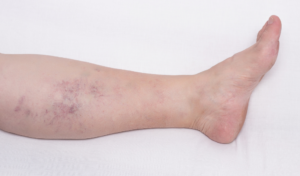 One of the conditions in which drainage massage is prescribed is for the pathology of the lymphedema that is, the inability to transport lymph, caused by a functional deficit of the lymphatic vessels or by an organic malformation. Other common pathologies are: phlebolymphedema resulting from an accumulation of blood and lymph, therefore from achronic venous insufficiency, The lipedema that is, proliferation with progressive degeneration of localized adipose tissue, mainly at the level of the coxofemoral joints and algodystrophic syndrome, which presents with subcutaneous edema more frequently in the hands and feet.
In short the lymphatic drainage It's a therapy prescribed in cycles of at least 5-10 sessions to reduce excess fluids that the body is unable to eliminate. The use of hands and physiotherapy is essential to help patients with fluid retention in the lower limbs, such as the feet or ankles, or following systemic diseases affecting the body.

Via Donatello 75
00195 Rome
Tel. (+39) 06 39375719


Mon. – Fri. 8:00 – 20:00
Saturday 8:00 – 14:00

Via Donatello 75
00195 Rome
Tel. (+39) 06 39375719
Mon. – Fri. 8:00 – 20:00
Saturday 8:00 – 14:00